Brown Literacy Movement
-
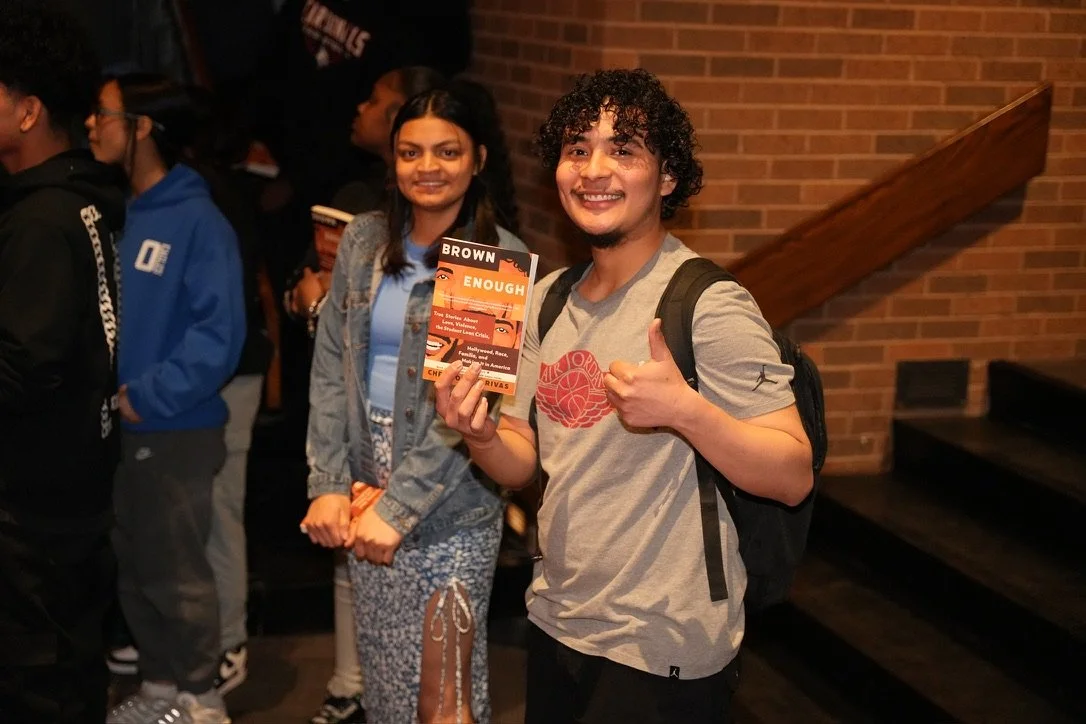
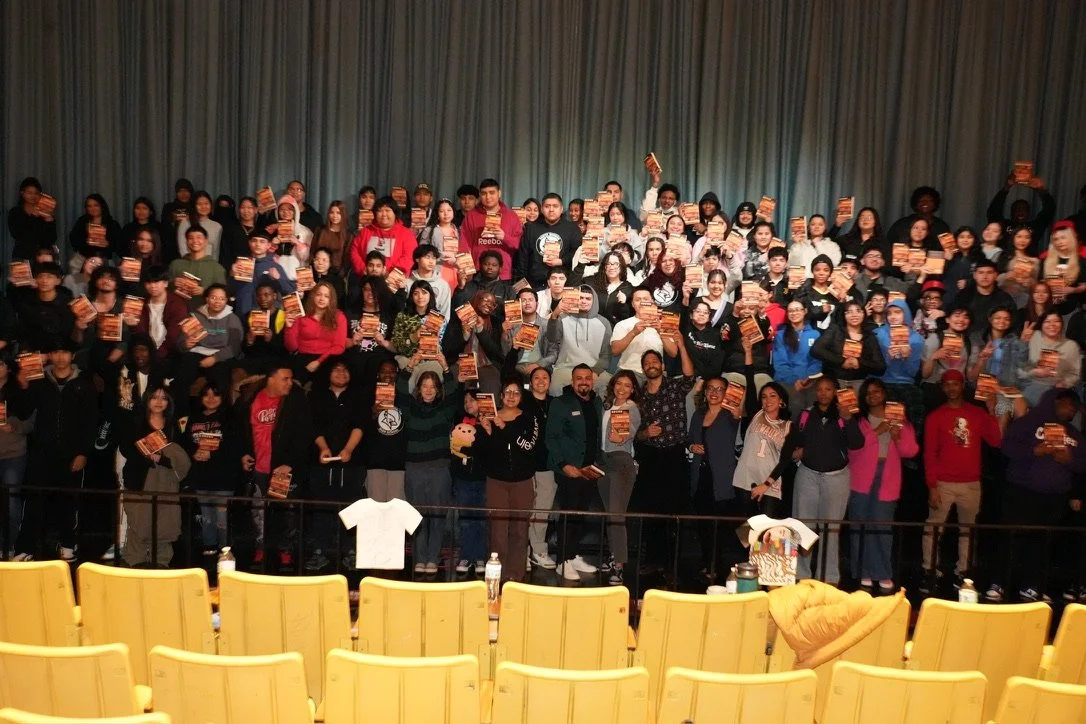
The Brown Literacy Movement exists to ensure that every student, especially Black, Brown, Indigenous, and other historically marginalized youth has access to culturally relevant books that reflect their identities, affirms their lived experiences, and empowers their voices.
We believe that reading and storytelling is not just an academic tool, but a path to liberation, healing, and belonging. Through free book distributions, author visits, school partnerships, and literary programming, we transform classrooms into spaces of equity, reflection, and joyful resistance. A place where young people not only see themselves on the page, but increase their sense of belonging, supporting their personal and collective mental health and well being and inspiring more young people to tell their own stories.
Most of all, we aim to give young people license to question everything. It’s terribly dangerous if we don’t give them the tools and the freedom to think for themselves. We adults have made a good mess of things. Maybe young people, if armed early on with social consciousness and the freedom of their own voice, will challenge and question and speak new ways of being into existence, maybe they can show us a way out and a new way in.
-
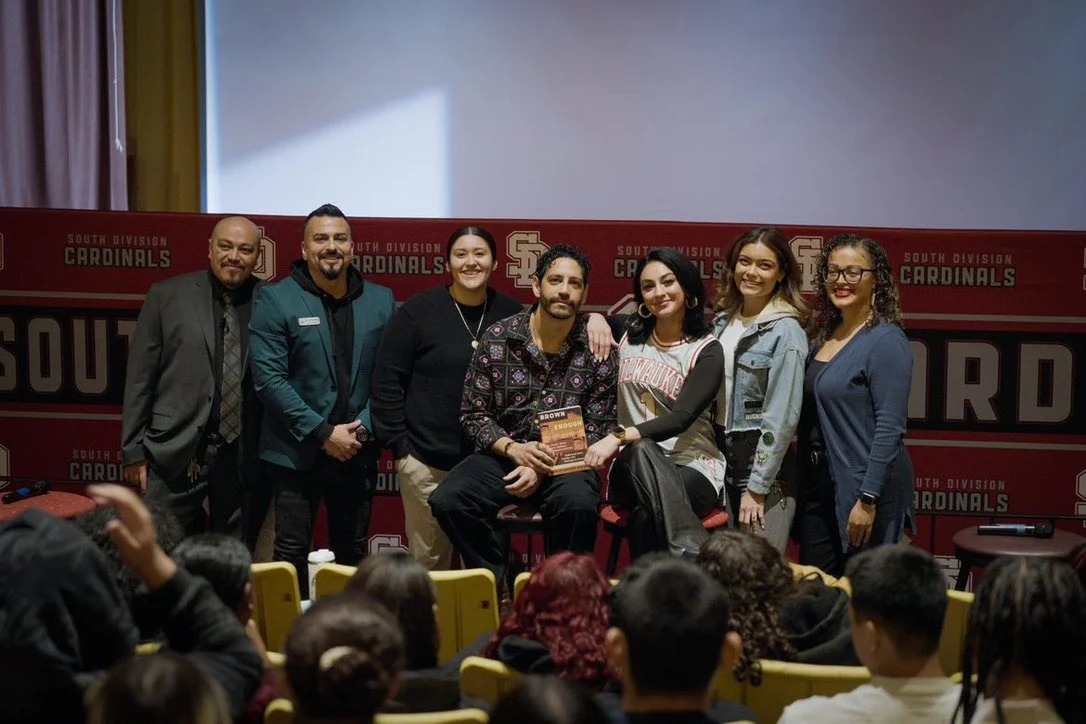
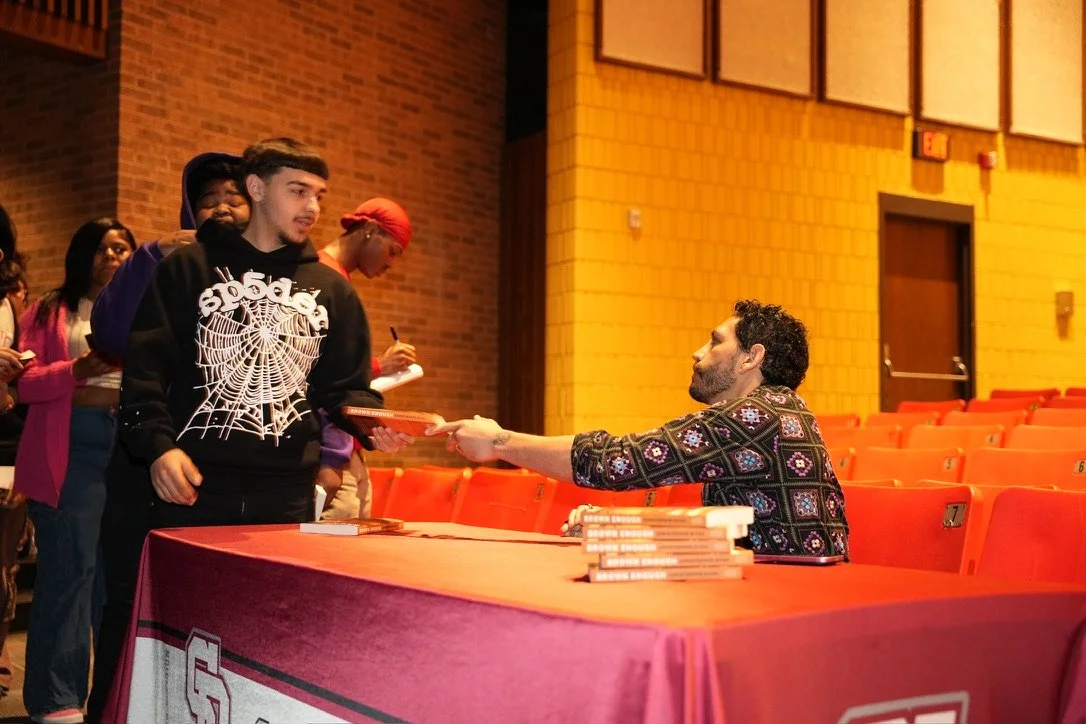
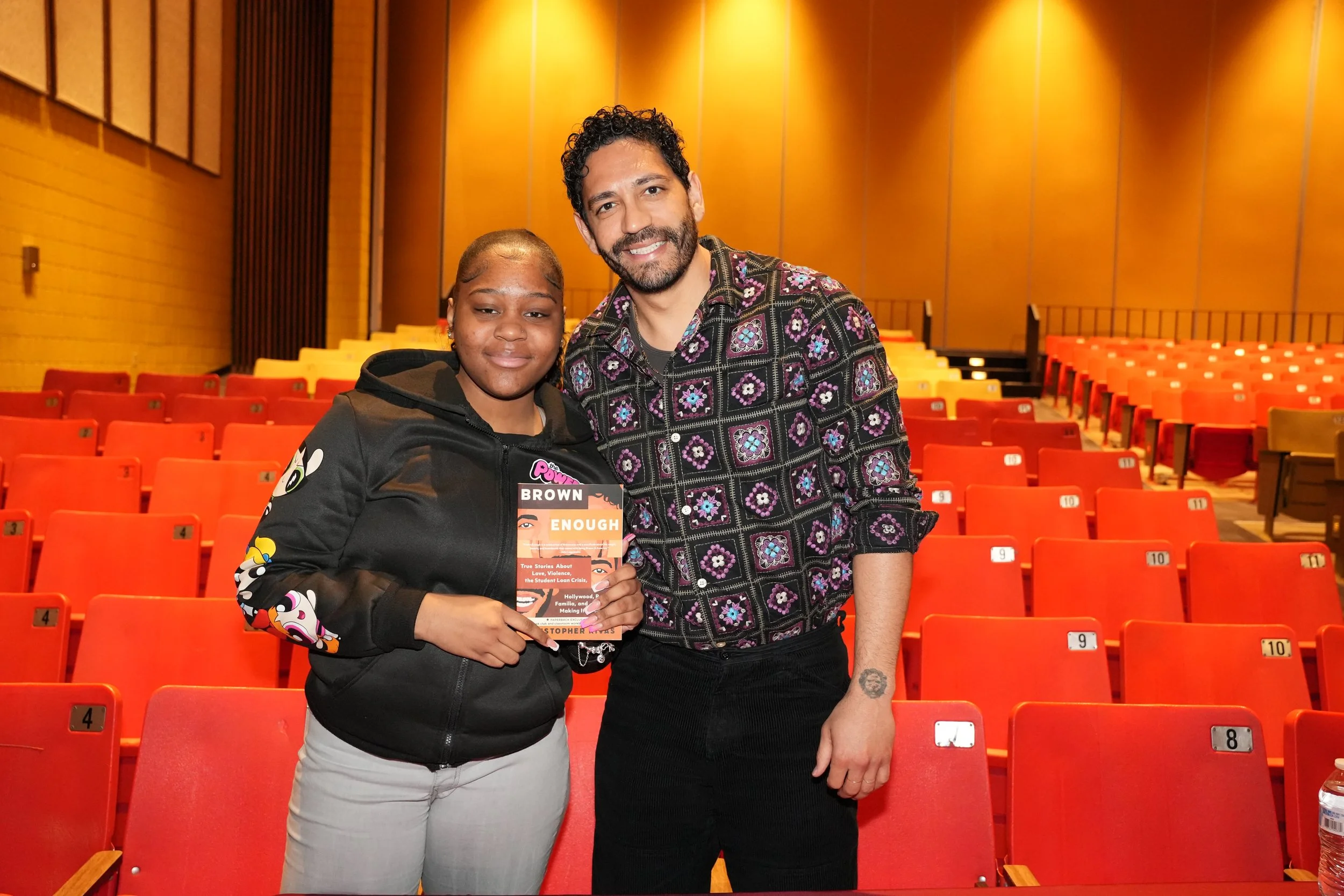
The program distributes free copies of books by Brown, Black, and Indigenous authors. We provide facilitation, study guides, author visits, and host student-centered discussions and community events around identity, culture, and collective liberation.
-
Books contain knowledge, and knowledge can give rise to new ideas, and new ideas can shape a new ethos, and a new ethos can guide new actions, and new actions can create entirely new worlds.
-
At the heart of our work is a return to the original purpose of education. The Latin root of the word, educare, means “to bring forth,” to draw out the innate wisdom and wholeness within each young person. In this way, education is not separate from healing, it is an act of liberation. Yet today’s students are constantly absorbing - scrolling, clicking, reacting. Surrounded by images and content that are always being provided for them, many young people struggle to imagine, to wonder, or to find their own voice. When imagination is outsourced, critical thinking and literacy suffer. The Brown Literacy Movement resists this trend. Through powerful, culturally relevant books and shared dialogue, we invite students to reclaim their minds, their identities, and their narratives. Reading becomes more than an academic exercise, it becomes a radical act of self-preservation and possibility.
This work is vital right now given the efforts in some local and state governments, and federally with policy changes to undermine the voices, agency, and lives of people of color. The initiative exists to ensure that Black, Brown, Indigenous, and other historically marginalized students not only see themselves in the pages of a book but are also empowered to lead the conversations that follow.
-
By centering marginalized voices, the Brown Literary Movement nurtures self-expression, empowerment, and a collective commitment to equity. Our goal is to create an inclusive, culturally conscious educational environment where all students feel seen, valued, and empowered to shape their own futures. Through this collective effort, the movement aspires to foster a lasting love of reading and a deep sense of solidarity among diverse communities.
-
“Books like Brown Enough are beyond vital for young people of color. Brown Enough has the power to change the narrative. It uplifts students like me. As a brown woman, it can feel like I’m constantly competing with White women and constantly searching for validation from men of color. Christopher Rivas validated and called out this toxic narrative, challenging men of color to see women from a different perspective. This book was both eye-opening and powerful—it gave me, and so many others, comfort in our color. Honestly, I think everyone can learn something from this book, which is why it’s so important to keep promoting Brown Enough in classrooms and libraries.” - Mei Lan Wang, South Division, Class of 2025
“Books like Brown Enough are essential in schools. Students deserve to have access to diverse stories of joy, resilience, and vulnerability. Brown Enough provides educators with tools to have conversations with students about the vibrancy and nuance of being Brown in America and to have conversations about race, ethnicity, and identity. The book beautifully opens up the doors to honest dialogue, communal healing, and self-love.” - Glennys Sánchez, Educational Equity Strategist, Lawrence, MA
“Books like Brown Enough belong in our schools because they give voice to the stories that too often go unheard. They remind us—and our students—that we are seen, we are enough, and our truths are powerful. As an educator, this book didn’t just resonate—it reached me. It echoed in my own story and affirmed the purpose behind my work. A book like Brown Enough is not just read—it is felt. It is a mirror, and a call to action. This is why we need it in our classrooms: to remind every student their story is worthy, their voice, vital.” - Ana Celia Báez, 2025 Wisconsin Teacher of the Year, Milwaukee, WI
“It is always challenging to find curricular materials that reflect the cultural and linguistic experiences of our black and brown children. Books like Brown Enough allow our students to see themselves in the curriculum in ways that few other curricular materials do. Our students have enjoyed reading the book as it validates their own lived experiences and inspires them to reach their full potential.” -Dr. José Trejo, Southside Division High School Principal, Milwaukee, WI
“It is important for our young men to see other men who look like them do something positive and to get a positive message from a positive man. The biggest challenge in school today is not academics- its socioemotional concerns our kids are dealing with. When we can get a man to come in and talk about his story and how he overcame the odds– it gives them the strength, courage, and fortitude to believe they themselves can overcome the odds.” –Dr. Lamar Collins, Inglewood High School, Los Angeles, CA -
As of 2025
States Served: CA, CO, CT, MA, WI
Districts Served:
6 for programming & 139 for curriculum
-
Authors (check out our catalog of authors and books here)
Angie Cruz
Juliet Diaz
Mike de la Rocha
Rafael Agustin
Julissa Arce
Lilliam Rivera
Christine Olivia
Anindya kundu
Yanely Espinal
Nonprofit and Social Impact Organizations:
United Nations High Commissioner for Refugees (UNHCR)
Safe Place for Youth
LAMP on Skid Row
LA vs Hate
Pathful
City of Asylum
Grow Mentoring
LOQULES
Tricycle: The Buddhist Review
Earthjustice
Helpline Youth Counseling
Arts and Cultural Organizations:
ArtsEmerson
City Theatre (Pittsburgh)
Kids of Immigrants
DNAWORKS
The Moth
SoulPancake
Upworthy
Skirball Cultural Center
Museum of Broken Relationships
Higher Education Institutions:
California Institute of the Arts (CalArts)
New York University (NYU)
University of California, Los Angeles (UCLA)
Media Collaborations:
The Emancipator
SiriusXM
Fox 11
-